
"coffee disaster"
3000 article(s) found

Coffee Story Coffee Culture in Pu'er Dakaihe Village
There is no winter feeling in Pu'er, Yunnan Province at the end of November. King Ka Nong Middle School in Dakaihe Village, Nanping Town, is drying peeled coffee fruits in his yard. In 2013, many Yunnan farmers, including the veteran coffee farmer, who has been growing coffee for more than 20 years, encountered a series of problems at low purchase prices, approaching the cost line. Although the purchase price of coffee is relatively low now, I believe

Full-bodied and thick Indonesian Java coffee taste variety characteristics description of manor flavor in producing area
Java produces only a small amount of Arabica beans, most of which were imported from Africa after the rust disaster. This coffee has a strong bitter taste after roasting, but the aroma is extremely light. Although the acidity is low and the taste is delicate, it is rarely used for direct drinking. It is often used to mix mixed coffee or to make instant coffee. Diseases and insect pests are really a powerful thing, it makes Pakistan

Is the emergence of "molecular coffee" the future or the end of traditional coffee?
Professional coffee knowledge exchange more coffee bean information Please pay attention to coffee workshop (Wechat official account cafe_style) Coffee is a crop, is the global crop trading volume of the first item, more than wheat, corn and other staple foods often eaten in human life, this is very exaggerated. Since coffee is a crop,

Is Blue Mountain Coffee really the best in the world? How much is the authentic Blue Mountain coffee?
For information, please follow the coffee workshop (Wechat official account cafe_style) Blue Mountain Coffee, which is made by brewing coffee beans from the Blue Mountains of Jamaica. According to the grade, it is divided into Jamaica Blue Mountain Coffee and Jamaican Alpine Coffee. The Blue Mountains are located in the east of the island of Jamaica (Jamaica), because the mountain is surrounded by the Caribbean Sea and the sun shines directly on clear days.

Flavor description of Salvadoran coffee beans introduction to manors in producing areas
Flavor description of Salvadoran coffee beans the characteristics of varieties in producing areas introduce the endless coffee fields, most of which are harvested mechanically in order to meet the economic benefits. When 75% of the coffee fruit in the coffee garden turns red, it starts to be harvested mechanically, followed by the same pre-operation of washing, moving into the sink to remove the floating beans, sifting out the sunken beans, and then using a large pulp screening machine to dig out the pulp.

An introduction to the flavor of Indonesia Manning boutique coffee bean manor with rich aroma and rich taste.
When it comes to the lively factor in the mild fragrance, its outstanding taste captivates many suitors. In the 17th century, the Dutch introduced Arabica seedlings to Ceylon (present-day Sri Lanka) and Indonesia. In 1877, a large-scale disaster hit the Indonesian islands. Coffee rust destroyed almost all the coffee trees, and people had to give up the coffee trees that had been in operation for many years.

China's coffee industry is developing rapidly, with a planting area of more than 1.8 million mu.
Although the coffee industry has a bright future, the problem of single variety also restricts the development of coffee industry in China. Long universe said frankly, at present, Katim series hybrid varieties account for more than 95% of the total coffee area in China, this series of varieties have the advantages of rust resistance, short stem, early production, high yield, quick effect, etc., but there are also defects such as poor stable yield, easy premature aging and poor quality. As the years of cultivation extend,

The output of coffee beans in Yunnan reached 139000 tons at the end of the harvest season from 2015 to 2016.
A few days ago, the reporter learned from the Yunnan Provincial Coffee Industry Association that the province's coffee harvest season in 2015 and 2016 has ended. Preliminary statistics show that the province's coffee production reached 139000 tons, an increase of 21000 tons over the 118000 tons in the 2014-2015 harvest season. Although the output of 139000 tons is higher than that of the last picking season, it is affected by low temperature and cold wave disaster, low market price and other factors.
High-yield cultivation techniques of Coffee in Hainan
In order to make the standardized planting technology of coffee easy to learn and understand, the Institute of Flavor and Beverage of the Academy of Thermal Sciences has also compiled "High-yield cultivation techniques of Coffee", "Diagram of High-quality and High-yield cultivation techniques of small-grain Coffee", "Coffee cultivation and Primary processing Technology", "standardized production Technology of small-grain Coffee" and other atlas and books, which are given to coffee planting free of charge. The "breeding of 8 clones of medium-grain coffee" developed by the institute has won the country.

Full bodied and aromatic, mantining Sumatra coffee with a hint of chocolate.
Taste to mild fragrance in the lively factor, it's outstanding and extraordinary taste charmed many suitors. In the 17th century, the Dutch introduced Arabica saplings to Ceylon (present-day Sri Lanka) and Indonesia. In 1877, a massive disaster struck the Indonesian islands, and coffee rust destroyed almost all the coffee trees, forcing people to abandon the coffee trees that had been in business for many years.

What is the income of coffee farmers in Ethiopia? is Kenya produced in Ethiopia?
Professional coffee knowledge exchange more coffee bean information Please pay attention to coffee workshops (Wechat official account cafe_style) Coffee is becoming more expensive, but coffee farmers are getting poorer, which makes coffee growers around the world roar, warning that Western coffee producers if they do not help them improve their incomes, it may trigger a new wave of "social disaster." The lush southern highlands of Ethiopia have been

Introduction to the Flavor description of excellent varieties of Indonesian Java Coffee by Flavor treatment
Java produces only a small amount of Arabica beans, most of which were imported from Africa after the rust disaster. This coffee has a strong bitter taste after roasting, but the aroma is extremely light. Although the acidity is low and the taste is delicate, it is rarely used for direct drinking. It is often used to mix mixed coffee or to make instant coffee. Diseases and insect pests are really a powerful thing, it makes Pakistan
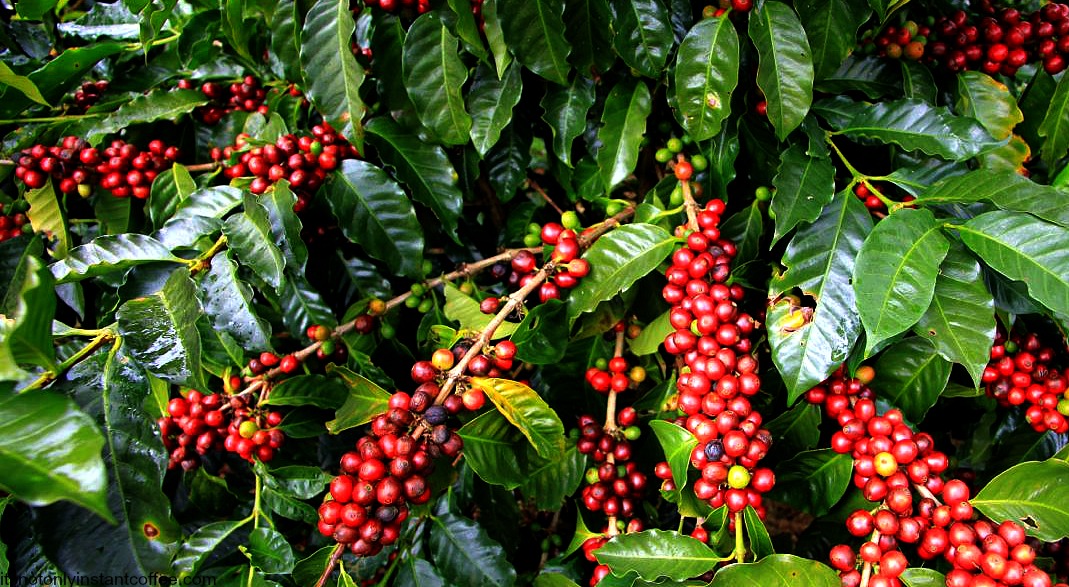
The coffee growers are roaring! Coffee is getting more expensive, but farmers are getting poorer!
Professional coffee knowledge exchange more coffee bean information Please pay attention to coffee workshops (Wechat official account cafe_style) Coffee is becoming more expensive, but coffee farmers are getting poorer, which makes coffee growers around the world roar, warning that Western coffee producers if they do not help them improve their incomes, it may trigger a new wave of social disaster. ■ Growers around the world have wa

The collapse of prices causes coffee farmers to roar that the coffee industry may usher in a social crisis.
Professional coffee knowledge exchange more coffee bean information Please pay attention to coffee workshops (Wechat official account cafe_style) Coffee is becoming more expensive, but coffee farmers are getting poorer, which makes coffee growers around the world roar, warning that Western coffee producers if they do not help them improve their incomes, it may trigger a new wave of "social disaster." In the lush southern highlands of Ethiopia

Coffee production Coffee introduction Guadeloupe Coffee
Good coffee production has been affected by natural disasters this group of islands in the Caribbean used to be an important producer of coffee. In 1789, more than 1 million coffee trees on 500 hectares of land produced 4000 tons. Today, only 150 hectares of land is used to grow coffee. This decline can be attributed to the increase in sugar cane and banana production and the impact of Hurricane HurricaneInes in 1996.

Guadeloupe Coffee disappears Bonifield Coffee Origin
Professional baristas Please follow the Coffee Workshop (Wechat official account cafe_style) good coffee production in Guadeloupe has been affected by natural disasters these islands in the Caribbean used to be important coffee producers. In 1789, more than 1 million coffee trees on 500 hectares of land produced 4000 tons. Today, only 150 hectares of land is used to grow coffee. The origin of this decline
Boutique coffee beans recommend Guadeloupe coffee
Good coffee production has been affected by natural disasters this group of islands in the Caribbean used to be an important producer of coffee. In 1789, more than 1 million coffee trees on 500 hectares of land produced 4000 tons. Today, only 150 hectares of land is used to grow coffee. This decline can be attributed to the increase in sugar cane and banana production and Hurricane Hurricane Ines in 1996.
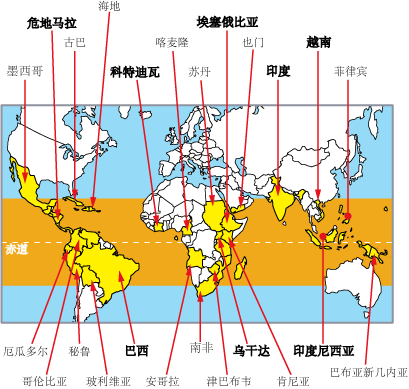
Coffee producing area worldwide 53 coffee producing area Guadeloupe Guadeloupe
Guadeloupe's good coffee production has been affected by natural disasters. The Caribbean islands used to be important producers of coffee. In 1789, more than 1 million coffee trees on 500 hectares of land produced 4000 tons, but today, only 150 hectares of land is used to grow coffee. This decline can be attributed to the increase in sugar cane and banana production and Hurricane Hu in 1996.

Introduction of Guadeloupe Coffee beans from Caribbean Coffee producing area
Guadeloupe used to be the best producer of coffee, but now it is no longer exported. Bonifieur is rated as the best quality coffee in the region, an once-proud name in coffee history. Good coffee production has been affected by natural disasters. The Caribbean islands used to be important coffee producers. In 1789, 500 hectares of soil
Guadeloupe used to be the best coffee producer and used to be a coffee mecca.
Good coffee production has been affected by natural disasters this group of islands in the Caribbean used to be an important producer of coffee. In 1789, more than 1 million coffee trees on 500 hectares of land produced 4000 tons. Today, only 150 hectares of land is used to grow coffee. This decline can be attributed to the increase in sugar cane and banana production and Hurricane HurricaneInes in 1996.